%20--%3e%3cpath%20d='M451.7,65.6v29.2h33.3c-2.8,4.2-11.2,7.9-26.3,7.9s-29.8-8.2-29.8-27.3,10.5-27.3,30.1-27.3,25.5,6.8,25.5,12.1h58v-4.2c0-30-17.2-40-48.4-40h-66.3c-34,0-56.7,14-56.7,51.4v15.4c0,37.8,21.2,51.4,53.5,51.4h28.1c18.5,0,29-6.5,34.8-15.2v14h55.8v-67.2h-91.5Z'/%3e%3cpath%20d='M550.2,15.9v36h55.8v44.1h-55.8v36.3h169.9v-36.3h-56v-44.1h56V15.9h-169.9Z'/%3e%3cpath%20d='M727.1,15.9v116.5h169.4v-34h-111.5v-6.5h110.4v-35.3h-110.4v-7h111.5V15.9h-169.4Z'/%3e%3cpath%20d='M903.4,15.9v36.8h55.8v79.7h58.1V52.8h56V15.9h-169.9Z'/%3e%3cpath%20d='M245.4,138.1h68.1c30,0,50.5-14.9,50.5-46.4V19.9h-54.3v52.6c0,18.5-8.8,28.6-29.1,28.6s-28.6-10.1-28.6-28.6V19.9h-58.1v71.7c0,31.5,21.2,46.4,51.3,46.4Z'/%3e%3cpath%20d='M16.6,15.9v117h58v-34.2h41.2c11.5,0,16.3,3.1,16.3,15.9v18.4h54.3v-28c0-14.6-8.6-20.5-20.8-22.2,12.5-2.6,21.5-11.4,21.5-26.6v-6.7c0-21.6-9.4-33.4-39.4-33.4H16.6ZM118.9,50.6c9.7,0,13.5,2,13.5,7.2s-3.8,7.2-13.5,7.2h-44.2v-14.3h44.2Z'/%3e%3c/svg%3e)
Weight Loss Medications: A Complete Guide to Your Options in 2026
From FDA-approved GLP-1 injections to oral medications, here is a plain-language breakdown of every major weight loss medication available today, how each works, and what the evidence shows.
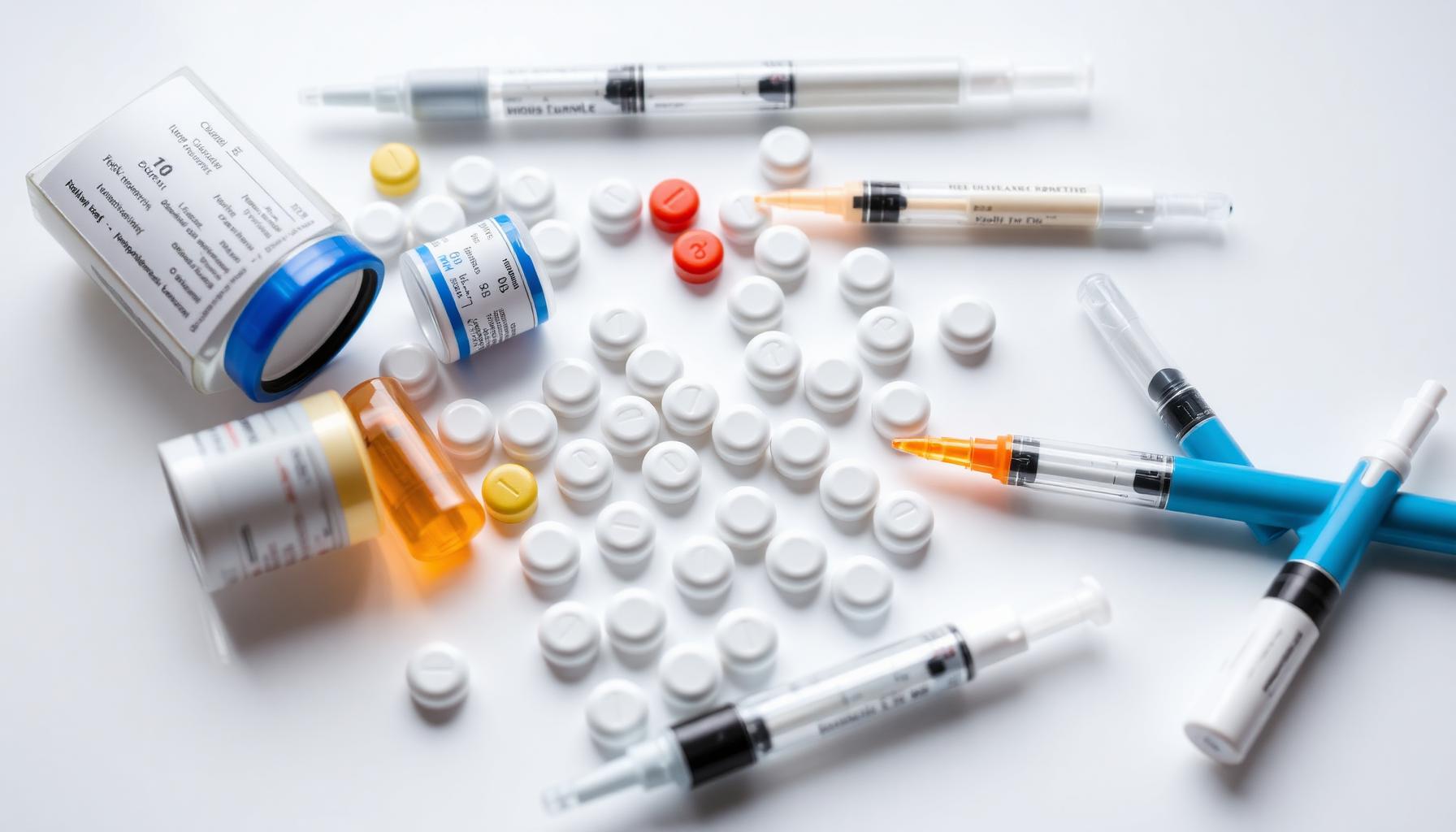
The weight loss medication landscape has changed more in the past five years than in the previous three decades combined. The arrival of GLP-1 receptor agonists as standalone weight treatments has set a new clinical benchmark for what medication-assisted weight loss can achieve, while older medications continue to play a role for men who are not candidates for or cannot access the newer options. This guide covers the full range of available approaches — FDA-approved GLP-1 injections, oral GLP-1 options, older FDA-approved weight loss drugs, and off-label medications — in plain terms, including how each one works and what the evidence shows.
A Note on Who Weight Loss Medication Is For
Weight loss medications are not appropriate for everyone. FDA-approved weight loss drugs are generally indicated for adults with a body mass index (BMI) of 30 or greater, or a BMI of 27 or greater with at least one weight-related health condition such as type 2 diabetes, hypertension, high cholesterol, sleep apnea, or cardiovascular disease.
Medication is typically considered when lifestyle interventions — dietary changes and increased physical activity — have not produced sufficient weight loss, or when the degree of excess weight and associated health risks warrants more aggressive treatment. A licensed healthcare provider should evaluate a man's full clinical picture before any weight loss medication is prescribed.[1]
GLP-1 Injectable Medications
Semaglutide — Wegovy (Weight Loss) and Ozempic (Diabetes/Off-Label)
Semaglutide is a GLP-1 receptor agonist that mimics a gut hormone involved in appetite regulation, gastric emptying, and blood sugar control. It reduces hunger, increases satiety, and slows digestion — all of which contribute to reduced caloric intake and weight loss.
Wegovy is FDA-approved for weight management in adults with obesity or overweight with a weight-related condition, dosed at 2.4 mg injected once weekly. The STEP 1 trial showed average weight loss of approximately 15% of body weight over 68 weeks alongside lifestyle changes.[2] Wegovy has also received FDA approval for reducing the risk of major cardiovascular events in adults with obesity or overweight and established cardiovascular disease, based on results from the SELECT trial.[3]
Ozempic contains the same active ingredient at a lower maximum dose (up to 2 mg weekly) and is approved for type 2 diabetes. It is sometimes prescribed off-label for weight loss, though Wegovy is the FDA-approved formulation for that indication.
Tirzepatide — Zepbound (Weight Loss) and Mounjaro (Diabetes/Off-Label)
Tirzepatide is a dual GLP-1 and GIP receptor agonist — the first medication to activate both of these gut hormone receptor systems simultaneously. This dual mechanism produces greater average weight loss than GLP-1 agonism alone.
Zepbound is FDA-approved for weight management and, separately, for moderate-to-severe obstructive sleep apnea in adults with obesity. The SURMOUNT-1 trial showed average weight loss of up to 20.9% over 72 weeks at the highest dose alongside lifestyle changes.[4] Mounjaro contains the same active ingredient and is approved for type 2 diabetes, sometimes prescribed off-label for weight loss.
Liraglutide — Saxenda (Weight Loss) and Victoza (Diabetes)
Liraglutide is an older GLP-1 receptor agonist administered as a once-daily injection. Saxenda is the weight loss formulation, approved for adults with obesity or overweight with a health-related condition. Clinical trials showed average weight loss of approximately 5 to 8% of body weight over one year — meaningful but lower than what is typically achieved with semaglutide or tirzepatide. Generic liraglutide is now available at lower cost, which makes it a relevant option for men for whom cost is a primary consideration.[5]
Oral GLP-1 Medications
Oral Semaglutide for Weight Loss (Wegovy Pill)
In December 2026, the FDA approved an oral formulation of semaglutide specifically for weight loss — the first oral GLP-1 medication approved for that indication. Taken once daily, clinical trials showed average weight loss of approximately 13.6% over 64 weeks — comparable to, though slightly lower than, the injectable Wegovy formulation. The oral format is an option for men who prefer to avoid injections. It must be taken on an empty stomach with a small amount of water and requires specific timing before eating or other medications to achieve adequate absorption.[6]
Rybelsus (Oral Semaglutide for Diabetes)
Rybelsus is an oral semaglutide tablet approved for type 2 diabetes, not weight loss. It contains the same active ingredient as Wegovy but is not FDA-approved for weight loss and is dosed at lower levels than weight loss formulations.
Older FDA-Approved Weight Loss Medications
Phentermine-Topiramate (Qsymia)
Qsymia combines phentermine, a stimulant that suppresses appetite, and topiramate, an anticonvulsant that also reduces appetite and may increase satiety. It is taken as an oral capsule daily and is FDA-approved for chronic weight management. In clinical trials, Qsymia produced average weight loss of 8 to 11% of body weight over one year. Side effects include increased heart rate, dry mouth, constipation, insomnia, and potential cognitive effects from topiramate. It is a controlled substance and is not appropriate for men with cardiovascular disease, hyperthyroidism, or a history of substance use disorder.[7]
Naltrexone-Bupropion (Contrave)
Contrave combines naltrexone, an opioid antagonist, with bupropion, an antidepressant and smoking cessation aid. Together, they act on the brain's reward and hunger centers to reduce appetite and food cravings. Taken as an oral extended-release tablet twice daily, Contrave produced average weight loss of approximately 5 to 6% of body weight in clinical trials. It carries a boxed warning for suicidal thoughts related to the bupropion component and is not appropriate for men with uncontrolled hypertension, seizure disorders, or those taking opioids or MAO inhibitors.[8]
Orlistat (Xenical, Alli)
Orlistat works differently from all other weight loss medications — rather than acting on appetite or hunger signaling in the brain, it inhibits pancreatic lipase, the enzyme responsible for digesting dietary fat in the gut. By blocking fat digestion, approximately 30% of ingested fat passes through unabsorbed, reducing caloric intake from fat. Clinical trials showed average weight loss of approximately 5 to 7% of body weight over one year. The major practical drawback is gastrointestinal: oily stools, oily spotting, and urgent bowel movements are frequently cited as reasons for discontinuation, and these are exacerbated by high-fat meals.[9]
Off-Label Medications Sometimes Used for Weight Loss
Metformin
Metformin is a first-line oral medication for type 2 diabetes that reduces hepatic glucose production and improves insulin sensitivity. Some evidence supports modest weight loss with metformin — typically 2 to 4% of body weight — and it is sometimes prescribed off-label as part of a weight management strategy, particularly in men with insulin resistance or prediabetes. It is inexpensive, generally well tolerated, and has a long safety record, but its effects are substantially more modest than the GLP-1 class.
Topiramate
Topiramate, used as a standalone medication for seizures and migraine prevention, has appetite-suppressing properties and is sometimes prescribed off-label for weight loss. Studies suggest 5 to 7% of body weight loss is achievable, but its side effect profile — cognitive blunting, word-finding difficulty, paresthesias, and significant risk of birth defects in pregnancy — limits its use.
Bupropion
Bupropion alone, an antidepressant and smoking cessation medication, is sometimes prescribed off-label for weight management. It can modestly reduce appetite and food cravings but is less effective than combination Contrave and carries the same boxed warning regarding suicidal ideation.
How to Choose Between Options
The decision about which weight loss medication is appropriate depends on the degree of excess weight, the presence of weight-related health conditions, history of cardiovascular disease, tolerance for injections versus pills, cost and insurance coverage, and other individual medical factors.
For men with significant obesity and weight-related health conditions, the GLP-1 injectable medications — particularly semaglutide and tirzepatide — represent the most clinically effective options currently available. For men who cannot tolerate injections, oral semaglutide is now available. For men for whom cost is the primary constraint, older oral medications or generic liraglutide may be more accessible. No medication should be used without a clinical evaluation, and ongoing monitoring is a standard component of all weight loss medication treatment.
References
- Jensen MD, Ryan DH, Apovian CM, et al. 2013 AHA/ACC/TOS Guideline for the Management of Overweight and Obesity in Adults. Circulation. 2014;129(25 Suppl 2):S102–38. PMID: 24222017. https://pubmed.ncbi.nlm.nih.gov/24222017/
- Wilding JPH, Batterham RL, Calanna S, et al. Once-weekly semaglutide in adults with overweight or obesity. N Engl J Med. 2021;384(11):989–1002. PMID: 33567185. https://pubmed.ncbi.nlm.nih.gov/33567185/
- Lincoff AM, Brown-Frandsen K, Colhoun HM, et al. Semaglutide and cardiovascular outcomes in obesity without diabetes. N Engl J Med. 2023;389(24):2221–2232. PMID: 37952131. https://pubmed.ncbi.nlm.nih.gov/37952131/
- Jastreboff AM, Aronne LJ, Ahmad NN, et al. Tirzepatide once weekly for the treatment of obesity. N Engl J Med. 2022;387(3):205–216. PMID: 35658024. https://pubmed.ncbi.nlm.nih.gov/35658024/
- Pi-Sunyer X, Astrup A, Fujioka K, et al. A randomized, controlled trial of 3.0 mg of liraglutide in weight management. N Engl J Med. 2015;373(1):11–22. PMID: 26132939. https://pubmed.ncbi.nlm.nih.gov/26132939/
- Knop FK, Aroda VR, do Vale RD, et al. Oral semaglutide 50 mg taken once per day in adults with overweight or obesity (OASIS 1): a randomised, double-blind, placebo-controlled, phase 3 trial. Lancet. 2023;402(10403):705–719.
- Knop FK, Aroda VR, do Vale RD, et al. Oral semaglutide 50 mg taken once per day in adults with overweight or obesity (OASIS 1): a randomised, double-blind, placebo-controlled, phase 3 trial. Lancet. 2023;402(10403):705–719. PMID: 37385278. https://pubmed.ncbi.nlm.nih.gov/37385278/ target="_blank" rel="noopener noreferrer">https://pubmed.ncbi.nlm.nih.gov/37541196/
- Gadde KM, Allison DB, Ryan DH, et al. Effects of low-dose, controlled-release, phentermine plus topiramate combination on weight and associated comorbidities in overweight and obese adults. Lancet. 2011;377(9774):1341–1352. PMID: 21481449. https://pubmed.ncbi.nlm.nih.gov/21481449/
- Apovian CM, Aronne L, Rubino D, et al. A randomized, phase 3 trial of naltrexone SR/bupropion SR on weight and obesity-related risk factors. Obesity. 2013;21(5):935–943. PMID: 23408728. https://pubmed.ncbi.nlm.nih.gov/23408728/
- Yanovski SZ, Yanovski JA. Long-term drug treatment for obesity. JAMA. 2014;311(1):74–86. PMID: 24399555. https://pubmed.ncbi.nlm.nih.gov/24399555/
Ready to start your weight loss journey?
🔥 Get 15% off RUGIET with code EMH15🔥 15% off RUGIET: EMH15