%20--%3e%3cpath%20d='M451.7,65.6v29.2h33.3c-2.8,4.2-11.2,7.9-26.3,7.9s-29.8-8.2-29.8-27.3,10.5-27.3,30.1-27.3,25.5,6.8,25.5,12.1h58v-4.2c0-30-17.2-40-48.4-40h-66.3c-34,0-56.7,14-56.7,51.4v15.4c0,37.8,21.2,51.4,53.5,51.4h28.1c18.5,0,29-6.5,34.8-15.2v14h55.8v-67.2h-91.5Z'/%3e%3cpath%20d='M550.2,15.9v36h55.8v44.1h-55.8v36.3h169.9v-36.3h-56v-44.1h56V15.9h-169.9Z'/%3e%3cpath%20d='M727.1,15.9v116.5h169.4v-34h-111.5v-6.5h110.4v-35.3h-110.4v-7h111.5V15.9h-169.4Z'/%3e%3cpath%20d='M903.4,15.9v36.8h55.8v79.7h58.1V52.8h56V15.9h-169.9Z'/%3e%3cpath%20d='M245.4,138.1h68.1c30,0,50.5-14.9,50.5-46.4V19.9h-54.3v52.6c0,18.5-8.8,28.6-29.1,28.6s-28.6-10.1-28.6-28.6V19.9h-58.1v71.7c0,31.5,21.2,46.4,51.3,46.4Z'/%3e%3cpath%20d='M16.6,15.9v117h58v-34.2h41.2c11.5,0,16.3,3.1,16.3,15.9v18.4h54.3v-28c0-14.6-8.6-20.5-20.8-22.2,12.5-2.6,21.5-11.4,21.5-26.6v-6.7c0-21.6-9.4-33.4-39.4-33.4H16.6ZM118.9,50.6c9.7,0,13.5,2,13.5,7.2s-3.8,7.2-13.5,7.2h-44.2v-14.3h44.2Z'/%3e%3c/svg%3e)
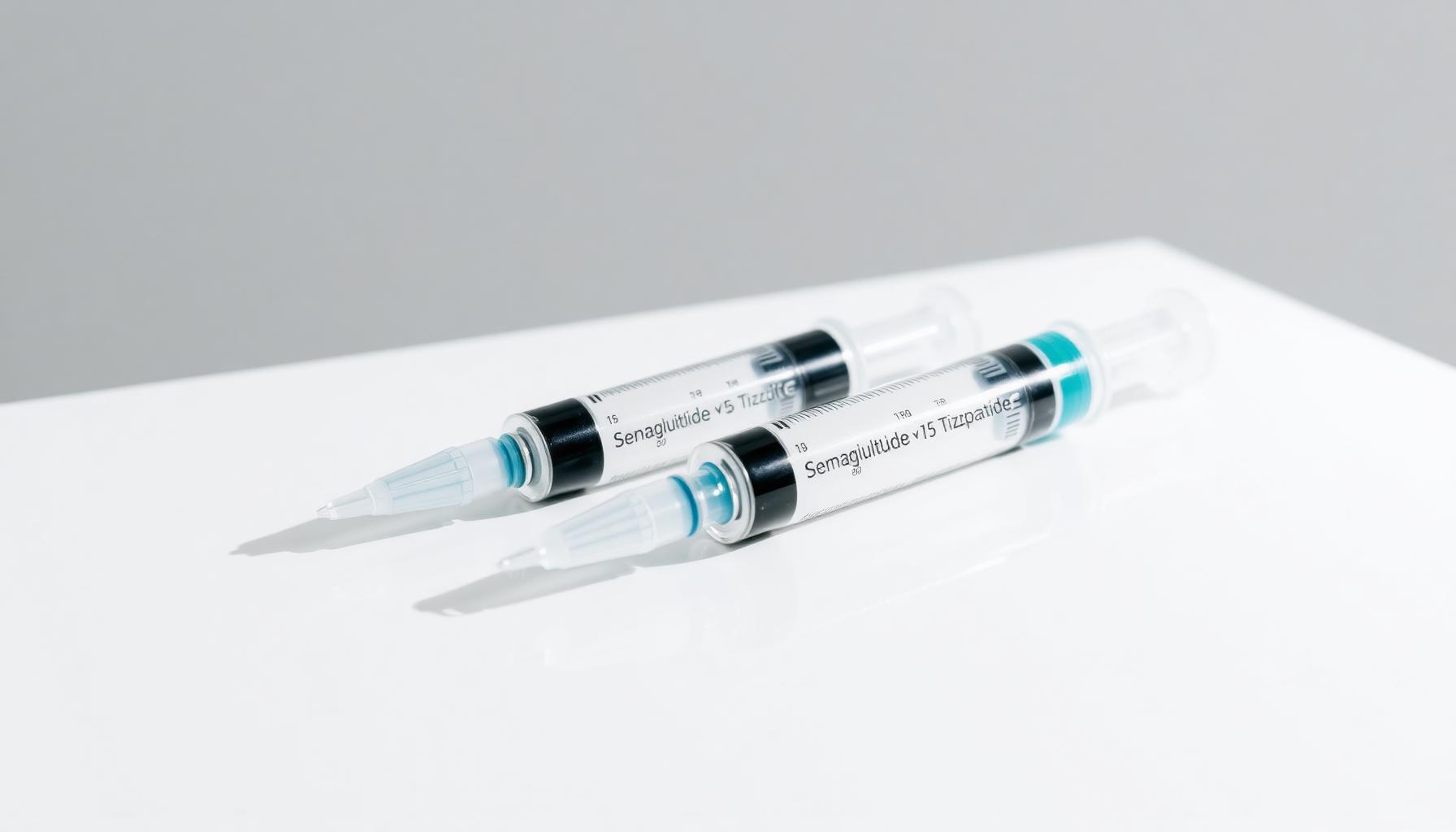
Semaglutide vs. Tirzepatide for Weight Loss: What's the Difference?
Semaglutide (Wegovy) and tirzepatide (Zepbound) are the two leading FDA-approved medications for weight loss. Here's how they differ in mechanism, clinical results, side effects, and who each one is best suited for.
Semaglutide and tirzepatide are currently the two most clinically effective medications available for weight loss. Both belong to the broader class of GLP-1 receptor agonists, both are administered as weekly injections, and both have shown results in clinical trials that substantially exceed what was previously achievable with medication. But they are not the same drug, and the differences between them — in mechanism, potency, clinical outcomes, and side effects — matter when a man and his provider are deciding which is the better fit. This article covers the key distinctions between the two, grounded in the clinical trial data.
The Core Difference: One Target vs. Two
Semaglutide is a GLP-1 receptor agonist. It mimics glucagon-like peptide-1, a gut hormone that reduces appetite, slows digestion, and promotes insulin release. This single-target mechanism is responsible for semaglutide's effects on weight and blood sugar.
Tirzepatide is a dual agonist — it activates both GLP-1 receptors and GIP (glucose-dependent insulinotropic polypeptide) receptors. GIP is a second gut hormone with overlapping but distinct effects on metabolism. When both receptors are activated simultaneously, the combined effect on appetite suppression, insulin secretion, and fat metabolism appears to produce greater weight loss than GLP-1 agonism alone.
This dual mechanism is the primary reason tirzepatide tends to produce more weight loss than semaglutide in clinical comparisons — not because one is a more potent version of the other, but because they work through different receptor systems.
FDA Approvals: What Each Drug Is Cleared For
Semaglutide is available under several brand names for different indications. Wegovy (injectable, 2.4 mg weekly) is FDA-approved for chronic weight management in adults with obesity or overweight with a weight-related health condition. Ozempic (injectable, up to 2 mg weekly) is FDA-approved for type 2 diabetes and for reducing cardiovascular risk in adults with type 2 diabetes and heart disease, but is sometimes prescribed off-label for weight loss. An oral semaglutide formulation for weight loss received FDA approval in December 2026.
Tirzepatide is available as Zepbound (FDA-approved for weight loss and, separately, for obstructive sleep apnea in adults with obesity) and Mounjaro (FDA-approved for type 2 diabetes, sometimes prescribed off-label for weight loss). Both Zepbound and Mounjaro contain the same active ingredient at the same doses.
Clinical Trial Results: How Much Weight Do They Produce?
Semaglutide (Wegovy) — STEP 1 Trial
The pivotal phase 3 trial for Wegovy enrolled 1,961 adults with obesity or overweight who did not have type 2 diabetes. Over 68 weeks, participants on 2.4 mg weekly semaglutide lost an average of 14.9% of their body weight — approximately 34 pounds — compared to 2.4% in the placebo group. About one third of participants lost 20% or more of their body weight.
Tirzepatide (Zepbound) — SURMOUNT-1 Trial
The pivotal phase 3 trial for Zepbound enrolled 2,539 adults with obesity or overweight without type 2 diabetes. At the highest dose tested (15 mg weekly), participants lost an average of 20.9% of their body weight — approximately 52 pounds — over 72 weeks, compared to 3.1% on placebo. At the 10 mg dose, average loss was 19.5%. At the 5 mg dose, 15.0%.
Direct Comparisons
In head-to-head comparisons, people on tirzepatide lost an average of 20.2% of their body weight after 15 months compared to 13.7% for those on semaglutide. The clinical takeaway: tirzepatide produces meaningfully greater average weight loss than semaglutide at approved doses. However, individual responses vary, and some men respond very well to semaglutide while gaining little additional benefit from tirzepatide.
Side Effects: How Do They Compare?
Both drugs share the same primary side effect profile, driven by their shared GLP-1 mechanism: gastrointestinal symptoms including nausea, vomiting, diarrhea, and constipation. These effects are most common at the start of treatment or after dose increases and typically diminish over time.
In clinical trials, GI side effects were reported at slightly higher rates with tirzepatide than semaglutide, consistent with tirzepatide's greater potency. Both medications carry a boxed warning for the risk of thyroid C-cell tumors observed in animal studies. Both are contraindicated in people with a personal or family history of medullary thyroid carcinoma or multiple endocrine neoplasia syndrome type 2. Both have been associated with rare cases of pancreatitis and gallbladder disease.
Dosing and Titration
Both medications are self-administered as once-weekly subcutaneous injections and use a gradual dose escalation schedule to minimize side effects.
Semaglutide (Wegovy) starts at 0.25 mg weekly and escalates over 16 weeks to the maintenance dose of 2.4 mg weekly. Tirzepatide (Zepbound) starts at 2.5 mg weekly and escalates over 20 weeks to the target maintenance dose of 5, 10, or 15 mg weekly depending on tolerability and provider recommendation.
Both drugs are injected into the abdomen, thigh, or upper arm and do not need to be taken with food.
Cardiovascular Outcomes
Semaglutide has a demonstrated cardiovascular benefit beyond weight loss. The SELECT trial showed that weekly semaglutide reduced major adverse cardiovascular events by 20% in adults with established cardiovascular disease and obesity or overweight — earning Wegovy an FDA approval specifically for cardiovascular risk reduction in that population.
Tirzepatide's cardiovascular outcome trial is ongoing. For men with established cardiovascular disease, the existing SELECT data for semaglutide may be a meaningful factor in the treatment decision.
Additional Approved Indications
Tirzepatide (Zepbound) has received an additional FDA approval for the treatment of moderate-to-severe obstructive sleep apnea in adults with obesity. For men with both obesity and sleep apnea, this may be a relevant consideration.
Semaglutide (Wegovy) has been FDA-approved for the treatment of metabolic dysfunction-associated steatohepatitis (MASH, also called fatty liver disease) with significant liver fibrosis.
How to Choose Between Them
There is no universally correct answer, and the decision should be made with a healthcare provider who can weigh several individual factors: if maximizing weight loss is the primary goal, the clinical evidence favors tirzepatide at higher doses. If cardiovascular risk reduction is a documented goal alongside weight loss, semaglutide has the completed outcome trial. If obstructive sleep apnea is a comorbidity, tirzepatide's additional approval is relevant. Cost and insurance coverage vary significantly between the two drugs and should be investigated carefully, as list prices for both exceed $1,000 per month without insurance.
A man's individual response, tolerability of side effects, and long-term adherence also matter enormously. The best weight loss medication is the one that is effective, well-tolerated, and can be sustained.
Ready to start your weight loss journey?
🔥 Get 15% off RUGIET with code EMH15🔥 15% off RUGIET: EMH15