%20--%3e%3cpath%20d='M451.7,65.6v29.2h33.3c-2.8,4.2-11.2,7.9-26.3,7.9s-29.8-8.2-29.8-27.3,10.5-27.3,30.1-27.3,25.5,6.8,25.5,12.1h58v-4.2c0-30-17.2-40-48.4-40h-66.3c-34,0-56.7,14-56.7,51.4v15.4c0,37.8,21.2,51.4,53.5,51.4h28.1c18.5,0,29-6.5,34.8-15.2v14h55.8v-67.2h-91.5Z'/%3e%3cpath%20d='M550.2,15.9v36h55.8v44.1h-55.8v36.3h169.9v-36.3h-56v-44.1h56V15.9h-169.9Z'/%3e%3cpath%20d='M727.1,15.9v116.5h169.4v-34h-111.5v-6.5h110.4v-35.3h-110.4v-7h111.5V15.9h-169.4Z'/%3e%3cpath%20d='M903.4,15.9v36.8h55.8v79.7h58.1V52.8h56V15.9h-169.9Z'/%3e%3cpath%20d='M245.4,138.1h68.1c30,0,50.5-14.9,50.5-46.4V19.9h-54.3v52.6c0,18.5-8.8,28.6-29.1,28.6s-28.6-10.1-28.6-28.6V19.9h-58.1v71.7c0,31.5,21.2,46.4,51.3,46.4Z'/%3e%3cpath%20d='M16.6,15.9v117h58v-34.2h41.2c11.5,0,16.3,3.1,16.3,15.9v18.4h54.3v-28c0-14.6-8.6-20.5-20.8-22.2,12.5-2.6,21.5-11.4,21.5-26.6v-6.7c0-21.6-9.4-33.4-39.4-33.4H16.6ZM118.9,50.6c9.7,0,13.5,2,13.5,7.2s-3.8,7.2-13.5,7.2h-44.2v-14.3h44.2Z'/%3e%3c/svg%3e)
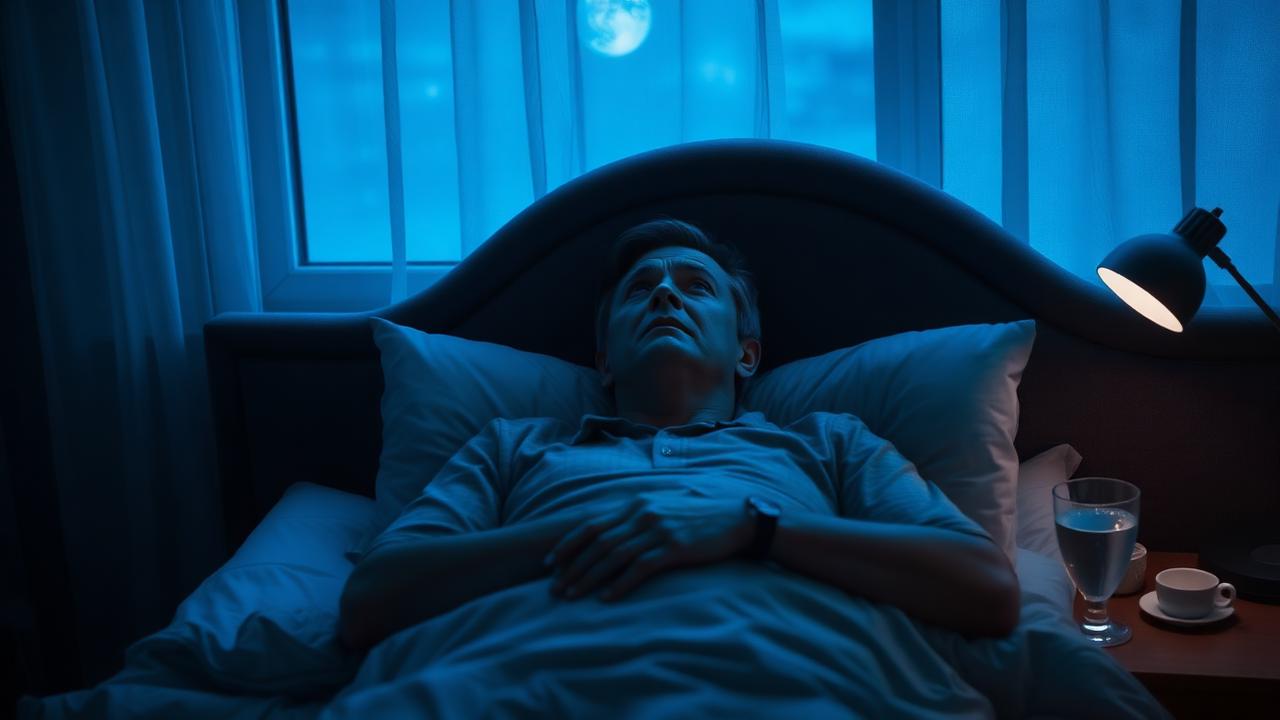
Ramelteon vs. Ambien: Why More Men Are Choosing Non-Habit Forming Sleep Treatment
Ambien works — but it comes with dependency risks, side effects, and a controlled substance label. Here's how ramelteon compares, and why more men are making the switch.
For years, Ambien has been the go-to prescription sleep aid for men who can't turn their brains off at night. It works fast, and for most people, it works well — at least initially. But as more becomes known about its side effect profile and dependency potential, a growing number of men are looking for prescription-strength sleep treatment that doesn't come with those trade-offs.
Ramelteon is one of the most clinically studied alternatives. Here's how the two compare.
How They Work — Fundamentally Different Mechanisms
Understanding why these two medications differ starts with how they work in the brain.
Ambien (zolpidem) is a sedative-hypnotic. It works by enhancing GABA, an inhibitory neurotransmitter that slows brain activity. In practical terms, it forces the brain into a sedated state. That's effective — but it's also why it carries the risks it does.
Ramelteon works through an entirely different pathway. Rather than sedating the brain, it targets MT1 and MT2 melatonin receptors — the same receptors the brain uses to regulate the sleep-wake cycle naturally. It works with the body's own sleep architecture rather than overriding it.
The Controlled Substance Question
This distinction matters beyond just mechanism. Ambien is classified as a Schedule IV controlled substance by the DEA, meaning it carries a recognized potential for misuse and dependency. It's intended for short-term use, and clinicians are advised to prescribe it cautiously — particularly in older adults, those with a history of substance use, or anyone prone to anxiety or depression.
Ramelteon is not a controlled substance. It has no recognized abuse potential and is not associated with physical dependency or withdrawal symptoms. A 2023 comparative study published in the International Journal of Pharmaceutical Sciences Review and Research found that after six months of ramelteon use, patients reported no rebound insomnia or withdrawal symptoms upon discontinuation — a meaningful distinction from sedative sleep aids.
Side Effects: A Meaningful Gap
Ambien's side effect profile is well-documented and worth understanding. Common side effects include dizziness, headache, and next-day grogginess — particularly at higher doses. More serious concerns include memory impairment, lack of coordination, and rare but documented complex sleep behaviors such as sleepwalking and sleep driving. These risks are significant enough that the FDA has issued warnings about them, and Ambien is generally recommended for short-term use only.
Ramelteon's adverse event profile in clinical trials is considerably shorter. The most common side effects — drowsiness, dizziness, nausea, and headache — each occurred in fewer than 1% of patients. It does not appear to cause complex sleep behaviors, and its risk of next-day impairment is lower than traditional sedatives.
Effectiveness: Is the Trade-Off Worth It?
A fair question is whether ramelteon actually works as well. The same 2023 comparative study found no significant difference between ramelteon and zolpidem in sleep latency, total sleep duration, or overall sleep quality. Both produced meaningful improvements over baseline.
Where they diverge is on the risk side of the equation. Ambien tends to be faster-acting and may be more effective for acute, short-term insomnia — particularly for men who need to fall asleep quickly. Ramelteon's strength is its safety profile and suitability for longer-term, more sustainable use.
It's also worth noting that ramelteon primarily supports sleep initiation. For men whose main struggle is staying asleep — waking in the night and not getting back down — a single-ingredient approach may not fully address the issue. Combination formulations that pair ramelteon with additional ingredients targeting sleep maintenance can fill that gap.
Who Should Consider Ramelteon Over Ambien
Ramelteon may be worth discussing with a provider for men who:
- Have used Ambien and experienced grogginess, memory issues, or unusual side effects
- Want a non-controlled, non-habit forming option for recurring sleep difficulties
- Travel frequently and need a sleep aid they can use without dependency concerns
- Have a history of substance use or are cautious about sedative medications
- Prefer a treatment that works with the body's natural sleep biology rather than sedating it
The Bottom Line
Ambien is effective and well-established. For acute, short-term insomnia, it remains a clinically recognized option. But for men looking for prescription-strength sleep support without the controlled substance label, dependency risk, or heavy side effect profile, ramelteon represents a meaningfully different approach — one that's backed by clinical data and increasingly preferred by men who've been through the Ambien cycle.
Try Recharge by Rugiet — Up to 17x Stronger than Melatonin
🔥 Get 15% off RUGIET with code EMH15🔥 15% off RUGIET: EMH15